




From platter to starred table: the versatility of Renieri Cinta Senese DOP prosciutto in the kitchen
When you hold an excellence like our Renieri Cinta Senese DOP Prosciutto in your hands, the first thought, rightly, is to enjoy it on its own, perhaps with a slice of good Tuscan bread. And it’s a wonderful experience, full of tradition and authentic flavors. But we, the Renieri family, who see this prosciutto born and grow with so much passion, know that its greatness doesn’t stop there. Such a special product, the result of a unique raw material and patient artisan processing, has the extraordinary ability to become the secret ingredient, that master touch capable of transforming your dishes into true gourmet creations, worthy of a special occasion table.
Today, we want to invite you to take a step “beyond the platter” with us, to discover how our prosciutto can truly elevate your cooking, inspiring preparations that, while maintaining a deep connection with our Tuscan roots, wink at what we might call a homemade “starred table.” We will present two special recipes, specifically designed to make our Renieri Cinta Senese DOP Prosciutto shine in perhaps unexpected ways, demonstrating its incredible versatility and ability to make every dish memorable.
Why does Renieri prosciutto elevate every dish? The value of quality you can taste
Before we get cooking, let’s understand why such high-quality prosciutto as ours – made from precious Cinta Senese DOP, naturally aged for long months in our cellars, and made without unnecessary additives – brings such unique and special added value to your recipes:
- An unparalleled depth of flavor: The sweet notes of the meat, that perfectly balanced savoriness given by sea salt, that light and very pleasant hint of umami, and the complex aromas of dried fruit and cellar, which developed slowly during the long aging, enrich every preparation with a complexity of taste that truly makes a difference.
- A unique and incredibly versatile texture: Its natural melt-in-your-mouth quality, especially that of its noble and fragrant fat, can enrich the creaminess of a risotto or the delicacy of a filling. If, on the other hand, it is made crispy, as we will see in one of our recipes, it adds a surprising textural note and a concentrated flavor that captivates.
- Natural and simple elegance: Sometimes, to transform a dish, very little is needed. A slice of our prosciutto, used wisely, can give a touch of refinement and character without needing to add too many ingredients or resort to professional chef techniques. It is the authenticity of the raw material that, almost by magic, becomes elegance on the plate.
Gourmet recipe 1: creamy sage risotto with crispy Renieri MAESTA' prosciutto petals and Vin Santo reduction
- The inspiration behind the dish: This recipe, friends, comes from our desire to combine some of the most deeply rooted flavors in our Tuscan tradition – the scent of fresh sage, the enveloping sweetness of Vin Santo – with the undisputed royalty of our Renieri MAESTA’ Prosciutto, our most prized selection, the one we lovingly age for over 36 months. It’s a dish that aims to be a true tribute to our land and its most precious gifts.
- An emotion on the plate: Imagine an enveloping risotto, almost a caress, intensely fragrant with fresh sage, where every grain of rice is perfectly creamed, just the right creaminess. Contrasting this softness are very thin and incredibly crispy “petals” of our MAESTA’ Prosciutto, which, upon contact with heat, release an intense and concentrated savoriness. All balanced, like an artist’s brushstroke, by a few drops of a sweet and aromatic Vin Santo reduction. It’s an elegant, sophisticated first course, perfect for special occasions, where our prosciutto becomes the undisputed protagonist of a wonderful interplay of textures and flavors that, we are sure, you won’t easily forget.
- Ingredients (for 4 people, for a special moment):
- 320g of very high-quality Carnaroli or Vialone Nano rice
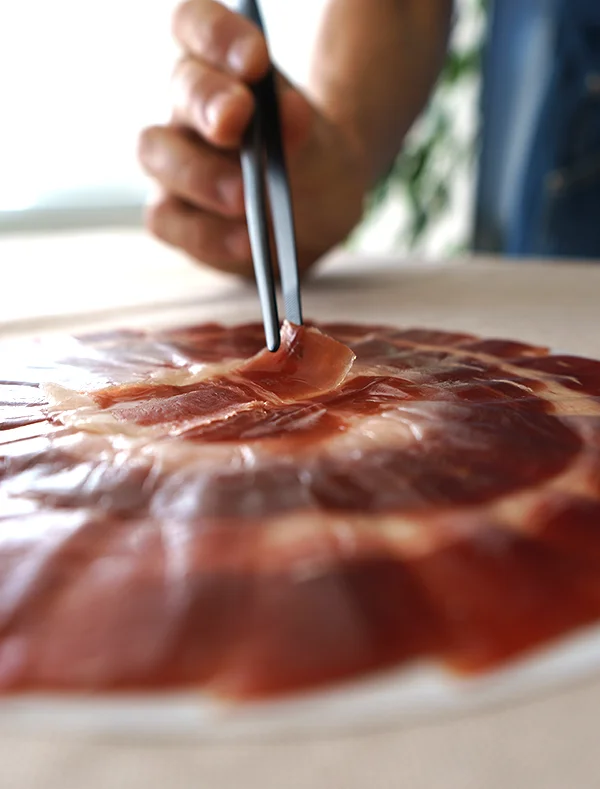
- 80g of our Renieri Cinta Senese DOP MAESTA’ Prosciutto, thinly sliced by your trusted salumiere (or by you, if you’re skilled!)
- 1 small shallot, finely chopped
- A nice bunch of fresh sage (about 10-12 large, fragrant leaves)
- About 1 liter of light, hot vegetable broth (homemade is always better!)
- Half a glass of good dry Tuscan white wine
- 50g of Parmigiano Reggiano DOP aged at least 24 months, freshly grated
- 30g of very cold butter, cut into small pieces (for perfect creaming)
- For the Vin Santo reduction: 100ml of good quality Vin Santo del Chianti, 1 teaspoon of sugar (optional, if the Vin Santo is not very sweet)
- Good Tuscan extra virgin olive oil
- Fine salt and freshly ground black pepper to taste
- How to make it (step by step, with a little care):
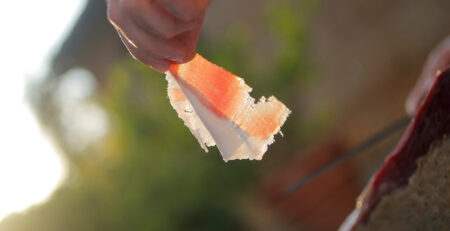
- Prepare the prosciutto petals: This is the “show-stopping” part! On a baking sheet lined with parchment paper, arrange the very thin slices of our Renieri MAESTA’ Prosciutto without overlapping them. Bake in a preheated oven at 180°C (350°F) for about 5-7 minutes, keeping a close eye on them: they should become crispy and lightly golden, but be very careful not to burn them, that would be a shame! Gently remove them from the oven and let them cool on absorbent paper: they will become even crispier and more crumbly.
- Prepare the Vin Santo reduction: In a thick-bottomed saucepan, pour the Vin Santo (and sugar, if you’ve decided to use it) and reduce it over very low heat until it reaches a slightly syrupy consistency, almost like liquid honey. This will take a little patience. Remove from heat and set aside.
- Prepare the risotto: In a high-sided saucepan (ideal for risotto), heat a couple of tablespoons of extra virgin olive oil with half of the sage leaves (the others, the most beautiful ones, you’ll use to garnish the dish). Add the chopped shallot and gently sauté it over low heat, without letting it brown, until translucent.
- Pour the rice into the saucepan and toast it for a couple of minutes, stirring continuously with a wooden spoon, until the grains become shiny and almost transparent at the edges.
- Deglaze with the white wine and let the alcohol evaporate completely, always stirring.
- Begin adding the hot vegetable broth, one ladleful at a time, waiting for the previous one to be absorbed by the rice before adding the next. Continue cooking for about 15-18 minutes (or follow the times indicated on your rice package), stirring very often, almost continuously, to release the starch and achieve that beautiful creaminess.
- When the risotto is almost cooked but still al dente, season with salt (always taste first, because the broth and prosciutto are already flavorful!) and add a grind of black pepper.
- Remove the risotto from the heat. Add the very cold butter in small pieces and the grated Parmigiano Reggiano. Cream vigorously, moving the saucepan or using the spoon, to create a perfect wave, a beautiful enveloping creaminess.
- Plate the hot risotto immediately. Garnish with the crispy petals of our Renieri MAESTA’ Prosciutto, roughly crumbled by hand, a few reserved fresh sage leaves, and a few precious drops of the Vin Santo reduction. A drizzle of raw olive oil, if you like, never hurts.
- Renieri chef’s tips (for a true master’s touch): For an even more intense sage aroma and an elegant decoration, you can briefly fry some whole sage leaves in a little hot oil until they become crispy and a beautiful bright green; use them to garnish the risotto. As for wine, for an expert pairing, choose a structured and fragrant Tuscan white, like a Vernaccia di San Gimignano Riserva, or, for a truly special occasion, an elegant Italian Metodo Classico sparkling wine, which with its freshness will pleasantly cleanse the palate.
Gourmet recipe 2: sole rolls with lemon scent and a heart of Renieri Cinta Senese DOP prosciutto on wild asparagus cream
- The inspiration behind the dish: A dish born from the desire to combine the almost ethereal delicacy of the sea with the decisive yet always elegant flavors of our land, where our Renieri Cinta Senese DOP Prosciutto becomes a precious heart, a hidden and flavorful treasure.
- An emotion on the plate: Imagine delicate, very fresh sole fillets, fragrant with lemon zest and juice, tenderly wrapping a flavorful and slightly savory heart of our prosciutto. All gracefully placed on a velvety and fragrant cream of wild asparagus (or common asparagus, if it’s not their short and precious season), for a contrast of flavors and colors that is a true joy for the eyes and, above all, for the palate. It’s a light yet incredibly flavorful main course, perfect for a special dinner, perhaps by candlelight, where you want to impress your guests with refinement and a touch of originality.
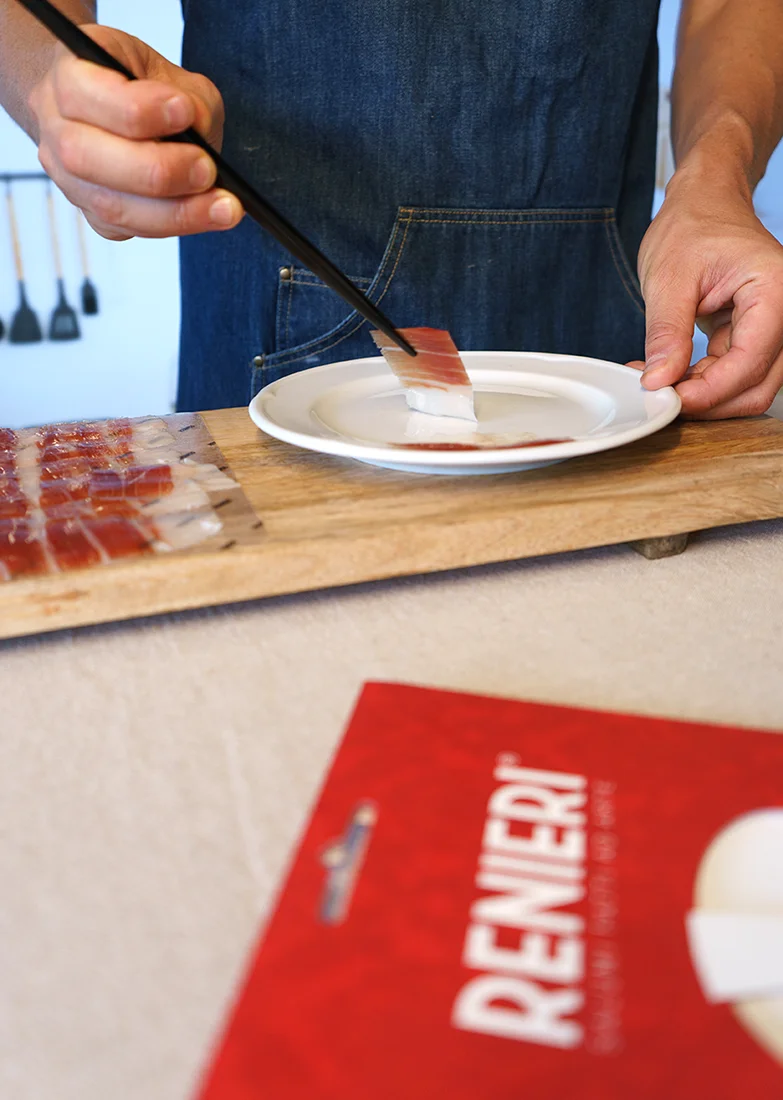
- Ingredients (for 4 people, for an elegant dinner):
- 8 very fresh and already cleaned sole fillets (ask your trusted fishmonger, about 400-500g total)
- 8 not-too-thin slices of our Renieri Cinta Senese DOP Prosciutto
- 1 organic, untreated lemon (we’ll use both the finely grated zest and a little juice)
- A nice bunch of wild asparagus (if you can find them, they’re a treasure!) or about 300g of tender green common asparagus
- 1 small, sweet shallot
- A splash of fresh liquid cream (very little, just to add creaminess, or whole or vegetable milk for a lighter version)
- Finely chopped fresh parsley, for aroma and color
- Delicate Tuscan extra virgin olive oil
- Fine salt and freshly ground white pepper to taste
- A sip of dry, fragrant white wine, for deglazing
- How to make it (step by step, with a little care):
- Prepare the asparagus cream: First, carefully clean the asparagus. Remove the hard, woody end of the stem, then cut them into pieces (set aside a few whole tips, the most beautiful ones, for the final garnish of the dish). Finely chop the shallot and gently sauté it in a saucepan with a drizzle of extra virgin olive oil. Add the chopped asparagus, lightly salt, and cook over low heat for about 10-15 minutes, stirring occasionally and adding a little hot water or light vegetable broth if you see them drying out too much. Once the asparagus is tender, blend them with an immersion blender, adding a drizzle of fresh cream (or milk) until you get a smooth, velvety, and beautiful bright green cream. Taste and adjust salt and pepper, if necessary. Keep the cream warm. If you’ve set aside asparagus tips for garnish, blanch them for just a few minutes in lightly salted water, then drain and immediately transfer them to ice water to maintain their vibrant color.
- Prepare the sole and prosciutto rolls: Lay out the sole fillets, well dried, on a clean work surface. Season them very lightly with a pinch of fine salt, a grind of white pepper, a little finely grated organic lemon zest, and a few drops of its juice.
- Gently place a slice of our Renieri Cinta Senese DOP Prosciutto on each sole fillet.
- Carefully roll each fillet over itself, starting from the narrower end, to form a small and graceful roll. Secure each roll with a toothpick to prevent it from opening during cooking.
- In a non-stick pan large enough to hold all the rolls without overlapping, heat a drizzle of extra virgin olive oil. When the oil is hot, gently place the sole rolls in the pan and brown them slowly on all sides for a couple of minutes, until they get a light golden color.
- Slightly raise the heat and deglaze with a splash of dry white wine, letting the alcohol evaporate completely. Lower the heat again to minimum, cover with a lid, and continue cooking for another 5-7 minutes, no more: sole cooks quickly and should remain tender and juicy.
- Plate elegantly: Pour a thin layer of warm asparagus cream onto the bottom of each individual plate. Gracefully place 2 sole rolls per person on top. Garnish with the asparagus tips you set aside, a generous sprinkle of finely chopped fresh parsley, and, if you like for an extra touch of freshness, a little more freshly grated lemon zest. A drizzle of raw olive oil never hurts.
- Renieri chef’s tips (for a true master’s touch): For an even more intense and Mediterranean flavor, you can add a fresh basil leaf or a small piece of well-drained sun-dried tomato in oil inside the roll, along with the prosciutto. This dish, with its delicacy and aromas, pairs magnificently with a fresh, savory, and aromatic Tuscan Vermentino.
The difference is in the quality, always!
As you will have gathered, dear friends, the perfect success of these dishes, which aim to be a bit more refined and special, depends fundamentally on the excellent quality of the ingredients you choose to use. And our Renieri Cinta Senese DOP Prosciutto, with its unique history, its exceptional raw material from our controlled supply chain, its artisan processing done with hands and heart, and its long and patient natural aging, is a true guarantee for bringing an authentic, superior flavor to your table, capable of making a difference.
Dare, experiment, elevate your cooking with Renieri!
Dare, experiment, elevate your cooking with Renieri!
We truly hope these ideas have sparked your imagination and made you want to get cooking! Our invitation, as always when it comes to our products, is not to limit the use of our wonderful Renieri Prosciutto to just the, albeit magnificent, platter. Dare, friends, experiment in the kitchen, let yourselves be inspired by its incredible versatility to create dishes that bear the signature of your creativity and the elegance that only a product of such artisan quality can bestow.
Investing in a product like Renieri Cinta Senese DOP Prosciutto, or our exclusive and multi-award-winning MAESTA’, means giving yourself the opportunity to transform every meal, even what might seem everyday, into a truly special experience, a small accessible luxury that speaks of tradition, territory, and so much, so much love for things done well, like in the old days.
Ready to transform your kitchen with a true connoisseur’s touch and impress your guests? Choose Renieri Cinta Senese DOP Prosciutto or our exclusive MAESTA’ directly from our shop online and let your creativity take flight!
We are truly curious to know what you think of these proposals and what wonders you will create with our products!